Todhchaí: New Initiative Putting the Irish language at the Heart of Ireland’s Economy
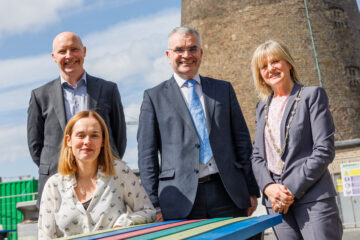
Minister Calleary launches Todhchaí, supporting 15 new start‑ups annually and expanding the Irish language economy nationwide.
Todhchaí is now open to Irish speakers across Ireland, please register your interest in building the service offering or providing services as Gaeilge at todhchai.ie.
Údarás na Gaeltachta, The Digital Hub and Gaeilge365 today announced the launch of Todhchaí, a new national enterprise programme designed to grow Ireland’s Irish language economy and support a rising generation of founders choosing to build businesses through Irish across Dublin and Gaeltacht areas.
Todhchaí is a partnership between Údarás na Gaeltachta, The Digital Hub and Gaeilge365 – an initiative of Dublin’s four local authorities. The programme supports Irish speakers to develop the skills, confidence and connections needed to build viable businesses and contribute directly to Ireland’s bilingual future. It also aims to support the creation of at least 15 live Irish language businesses each year.
On Tuesday 12 May, the Minister for Rural and Community Development and the Gaeltacht, Dara Calleary TD, officially launched Todhchaí at The Digital Hub, Dublin 8.
Operating across the country, Todhchaí ensures that whether a founder is based in Inchicore or Inis Meáin, Baile Sceilg or Ballybrack, Gaoth Dobhair or Garristown, they can start and scale a business through Irish.
The momentum behind Irish language enterprise is already visible on the ground and this reflects an emerging startup culture where founders are increasingly choosing to build businesses that operate trí Ghaeilge – serving public bodies, communities and markets at home and abroad.
Key supports will include:
- Online courses, hackathons and startup bootcamps designed to help people build businesses through Irish
- Direct connections between Irish language entrepreneurs and public and private sector partners with real market demand
Minister for Rural and Community Development and the Gaeltacht, Dara Calleary TD remarked at the launch: “Todhchaí is an ambitious programme, aligned with the National Plan for Irish Language Public Services 2024–2030, and represents a commitment to delivering a bilingual public service and supporting a broader move towards a bilingual society. Entrepreneurship is at the centre of the initiative, converting Irish language skills into thriving enterprises that strengthen Ireland’s economy while supporting public service delivery trí Ghaeilge.”
Tomás Ó Síocháin, CEO of Údarás na Gaeltachta, said: “Údarás na Gaeltachta has been the engine of economic and social development supporting just under ten thousand jobs in client companies across Gaeltacht communities from Donegal to Kerry to ensure the survival of the Irish language. Todhchaí is the next step in that mission. It is the platform to bring Irish language service providers together with the growing demand for Irish language service providers. In doing so, it will use the national gteic network of more than 30 digital hubs to create a new generation of entrepreneurs who see the Gaeltacht not just as a place of culture but as a place of opportunity, a place where they can build a business, raise a family and live their lives through Irish.”
Fiach Mac Conghail, CEO of The Digital Hub, said: “This is an idea that has arrived in time. What was missing in the early part of my career was a chance to continue to use my Irish in a professional environment. It’s different now. Irish is a normal working language for many people. What we’re missing is the structure to support the entrepreneurs. Todhchaí fills that gap – it’s about building a modern, sophisticated entrepreneurial culture that happens to work through Irish.”
Mary Uí Choileáin is a technology professional with nearly twenty years of experience in quality assurance and release management. Her career has focused on cross‑functional teamwork and strong communication processes. When the company she worked for was sold in 2024, she used the transition to explore new opportunities and to reconnect with the Irish language after returning to her home community in the Múscraí Gaeltacht.
She joined the Cyber Innovate programme to develop a cybersecurity venture and soon became involved in a project with Údarás na Gaeltachta and MTU to establish cybersecurity education in Campas Íosagáin. As a fluent Irish speaker, she stepped into the role of independent consultant, linking technology, education and minority‑language communities. She is now focused on creating a cybersecurity platform informed by research within the Gaeltacht and adaptable to other minority‑language regions such as Wales, Iceland and the Basque Country, combining technical expertise with a commitment to linguistic and cultural inclusion.