New Book Celebrates a Century of Textile Heritage in the Southwest Donegal Gaeltacht
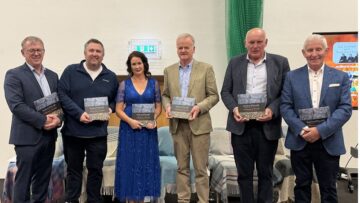
Údarás na Gaeltachta and Áislann Chill Charthaigh are delighted to announce the forthcoming publication of A History of Textiles in the Southwest Donegal Gaeltacht, a landmark bilingual book that traces the rich story of wool, yarn and tweed across more than a century in one of Ireland’s most storied regions.
Donegal is widely recognised as the heartland of tweed and wool. The industry evolved from the late 1800s along two complementary paths: enterprising local grocers who expanded into tweed production, and community-driven cooperatives supported by charitable organisations and government initiatives. Together, these approaches laid the foundation for a thriving textile sector in southwest Donegal. The areas of Ard an Rátha, Gleann Cholm Cille and Cill Charthaigh became renowned centres of production, and their legacy endures as a living testament to the region’s people, its rugged landscape, and a heritage valued around the world.
This new bilingual publication brings that heritage to life — telling the full story of the textile tradition that has shaped the southwest Donegal Gaeltacht for generations.
The book will be officially launched on Friday, 3rd July, at 7.30 pm, at Áislann Chill Charthaigh.
Muiris Ó hEigheartaigh, Áislann Chill Charthaigh, said:
“I am delighted that we have reached the final stage with this very important story from our Gaeltacht region. I would personally like to thank everyone who generously shared their stories and photographs with us. This publication would not have been possible without the support of Údarás na Gaeltachta. On behalf of Áislann Chill Charthaigh, we are extremely grateful.”
Donnchadh Ó Baoill, Údarás na Gaeltachta, said:
“The story of textiles in this region is inseparable from the story of the Gaeltacht itself — it is woven into who we are. We are enormously proud to celebrate the generations who kept this tradition alive through their work with wool, yarn and tweed. This book is an enduring tribute to the richness of our region’s heritage, and we hope it will inspire the next generation to cherish and carry that tradition forward.”